

- HOME
- Research
Research policy
We aim to contribute to a carbon-neutral (CN) society through research on energy systems based on zero-carbon energy.
Specifically, we are working toward the establishment of Active Carbon Recycling Energy System, ACRES as an ultimate CN technology. Our research focuses on CO2 utilization, which is a key technology within ACRES. In particular, the conversion of CO2 to CO is important, therefore, we are developing CO2 electrolysis technologies.
Energy storage is essential for achieving a carbon-neutral society. In Japan, final energy consumption (13×1018 J [1]) consists of approximately one-quarter electricity and three-quarters heat. Efficient use of heat is therefore critically important. For this reason, we also focus on thermal energy storage systems, with particular interest in thermochemical energy storage. Our goals include developing highly reactive and thermally conductive composites, as well as constructing both high- and low-temperature thermal energy supply systems based on chemical heat pumps utilizing these composites.
High-efficiency hydrogen separation is also vital for hydrogen production processes in hydrogen energy systems. We are developing thin membranes for hydrogen separation using palladium-based alloys, which are well-known hydrogen-permeable metals.
We are conducting our research on novel energy storage and conversion technologies to help realize a carbon neutral society.
[1] FY2020 Annual Report on Energy, METI, Japan (2020)
Research Themes
(1) Active Carbon Recycling Energy System, ACRES
An energy system for carbon dioxide recycling and utilization are essential for low-carbon industrial processes such as iron-making (Fig. 1). A carbon neutral industry can be achieved by integrating zero‑carbon energy sources. Our research focuses on carbon monoxide (CO) production, which plays a key role in carbon dioxide (CO2) utilization. Specifically, we are developing metal-supported solid oxide electrolysis cell (SOEC) for CO2 electrolysis and CO production. Metal-supported SOECs are promising candidates for large-area cells and mass CO2 electrolysis for industrial applications.
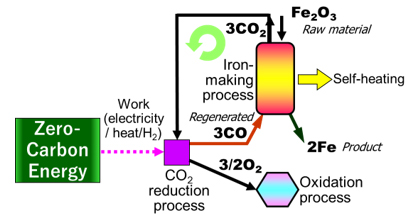
Fig. 1 Active Carbon Recycling Energy System, ACRES
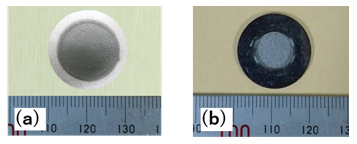
Fig. 2 Metal-supported solid oxide electrolysis cell
(2) Thermochemical energy storage and chemical heat pump
We are developing composite materials for thermochemical energy storage to recover, store, and use industrial waste heat that is typically unrecoverable with conventional technologies (Fig. 3). Our primary focus is a chemical heat pump system based on a calcium oxide/water reaction system. We are also exploring alternative reaction systems and materials that enable heat recovery across a wide range of temperatures. Thermochemical storage materials can also be applied to large-scale thermal energy storage plants capable of storing surplus electricity generated from variable renewable energy sources.
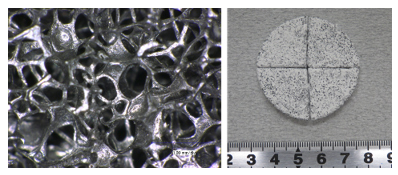
Fig. 3 Composite thermochemical energy storage material based on calcium oxide and porous support
(3) High-efficient hydrogen permeable membrane
Another focus of our group is the development of hydrogen-permeable membranes for producing next-generation energy carriers such as hydrogen. We have developed a metal‑supported copper-palladium composite membrane using a novel reverse build-up fabrication method (Fig. 4). This membrane features a thin Cu–Pd layer with a thickness of only several micrometers (conventional membranes are typically thicker than 10 μm). By stacking planar membrane units, compact and cost‑effective hydrogen separation systems can be realized.
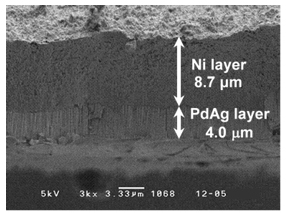
Fig. 4 Metal-supported copper-palladium composite hydrogen permeable membrane